How to help a young footballer progress
5 min
Talent matters, but on its own it guarantees little. What kind of environment, workload and individual work actually help a young player grow — without false promises about a career.
Almost every child who takes football seriously has at least once pictured themselves in a big stadium. For some it stays a childhood dream; for others it slowly becomes a goal. And parents want to help. But what actually shapes development — and can you raise the chances of one day reaching the professional game?
There is no simple answer. A career depends on ability, preparation, motivation, health, competition and luck. We do not control all of that. But that does not mean we only wait for talent. A lot can be done already — by building calm, consistent conditions for growth.
In youth football you often see players who clearly stand out: faster, more confident on the ball, scoring more. It looks as if their path is already set. But an early advantage rarely lasts forever. Children grow unevenly: one matures sooner and dominates, then a couple of years later that edge fades. Another trails in speed and strength for a long time — then jumps forward when the physical side catches up.
So I almost never judge prospects only by today’s goals and the match result. What matters more is how the player learns, how they work with the ball, whether they understand the game, how they decide, and how they respond when things go wrong. Talent is a good starting point. What follows is the quality of work over years.
A lot depends on the environment: the team, the coaches, the level of competition, and regular minutes. You do not have to chase the loudest academy name. You can join a strong club and barely play. Development needs match practice: that is where decisions are made under pressure, mistakes are lived with, and the player adapts to the game.
Sometimes a step into a stronger team is right. Sometimes it is wiser to stay where there is trust from the coach and real playing time. There is no universal recipe — only the player and their stage.
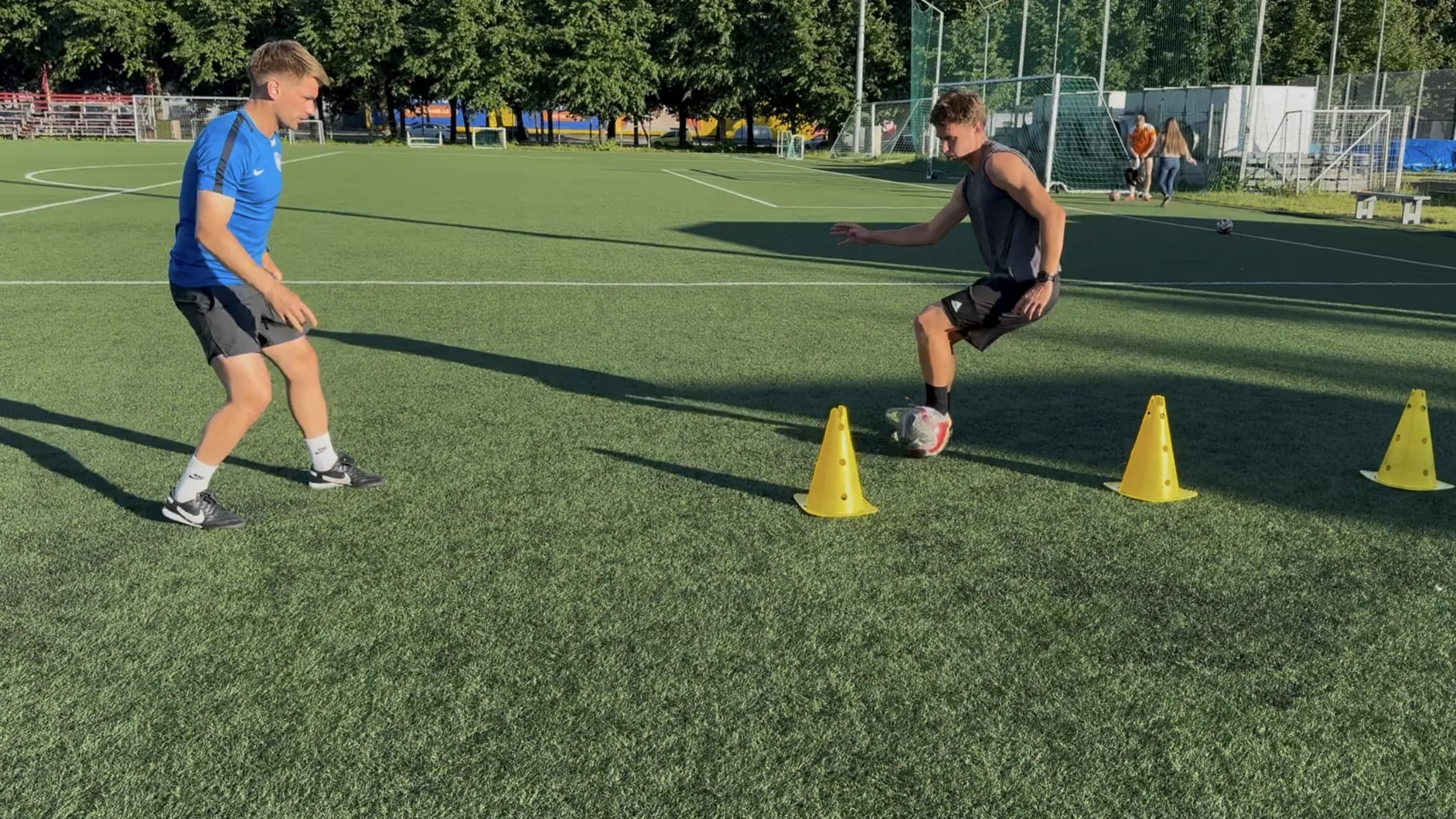
Even in a good academy, sessions are built around the team: combinations, principles, situations. Each footballer still has their own gaps. One lacks a first touch under pressure, another the speed of a technical action, a third the timing to move into space. You cannot dig into all of that equally in a group. So individual work matters not as “more hours on the pitch”, but as a chance to unpack a concrete task and connect it to real play. A nice action without opposition does not mean it will appear in a match.
And progress is not “the more training, the better”. Extra load easily turns into fatigue, injury and lost interest — especially in the teenage years. Sleep, food, a sensible schedule and the right to rest from football all matter. The goal is not to squeeze the maximum out of next weekend, but to help the player grow for years.
Parents matter enormously — usually not through tactical advice, but through the environment: the club, recovery, support in hard periods. And through protecting the child’s own motivation. When football becomes only someone else’s expectations, even a capable player can burn out. It is more useful to look at development over months and years than to judge after every match.
The path to professional football is almost never straight. There are surges, setbacks, competition, coaching changes. The point is not to hunt for one magic solution, but to build a system: the right team, quality sessions, match practice, focused individual work and recovery.
No one can guarantee a career. But you can help a child become as strong a footballer as their ability, character and love of the game allow. And if that one day leads to the professional game — the years of work did their job.